
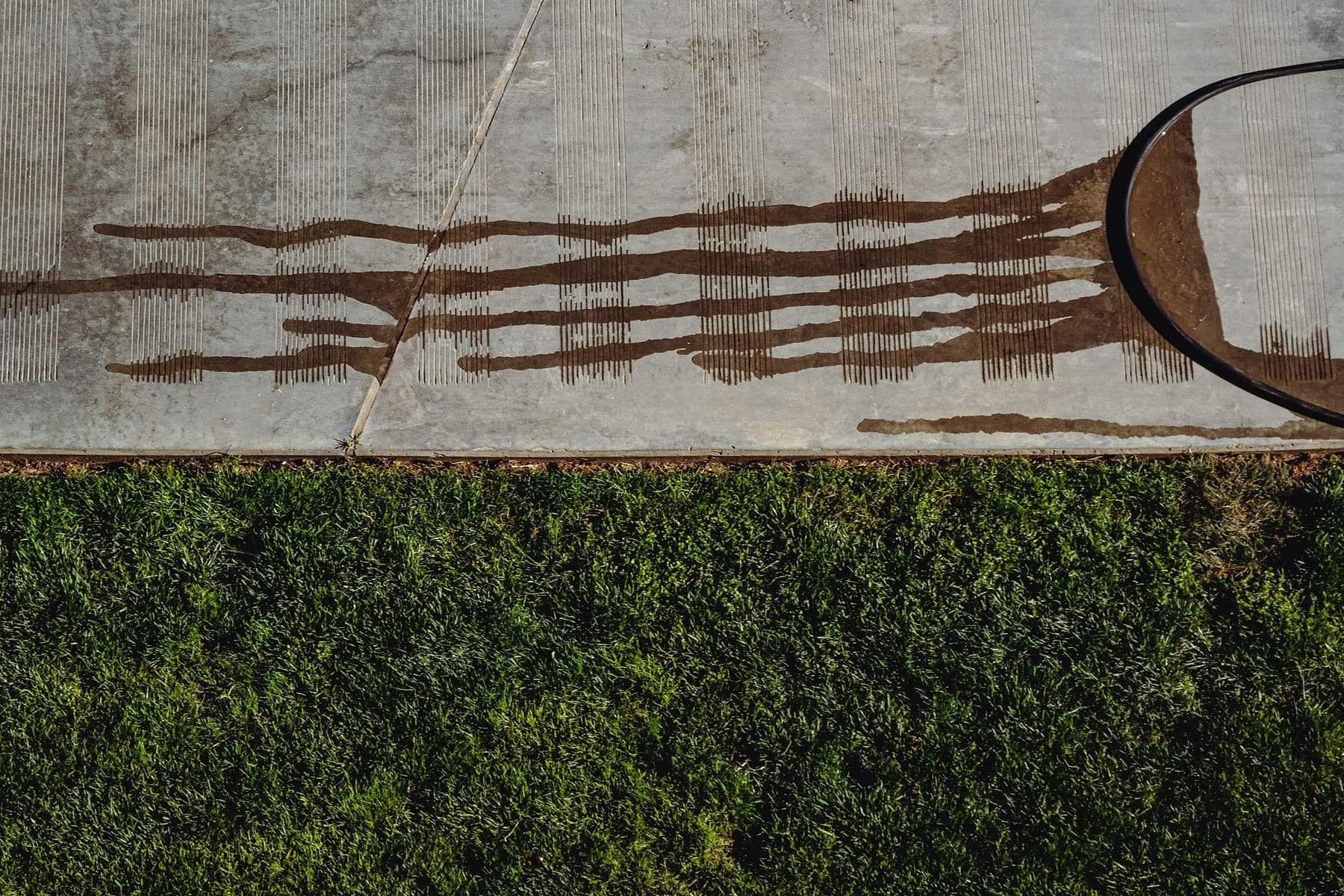
Concrete does not dry — it cures. It is a chemical reaction between cement and water that keeps building strength for weeks after the surface looks finished. Understanding that one distinction explains every rule on this list.
Day one: stay off it. Foot traffic is generally fine after about 24 hours, but keep pets off it too — paw prints set permanently, and so do bike tires, ladder feet, and anything dropped on the surface.
The first week: no vehicles. Seven days is the normal wait for a car on a residential driveway. Heavier vehicles — moving trucks, dumpsters, concrete or delivery trucks — should stay off until day 28. This is the single most common way a good slab gets damaged in its first month.
Keep it wet, not dry. Counterintuitive, but concrete that dries too fast is weaker and more prone to surface cracking. In hot or windy weather we may cover the slab or apply a curing compound. If we ask you to mist it, that is why — and it matters most in the first three to seven days.
Hairline cracks are normal. Fine shrinkage cracks can show up in the first weeks and are not a structural problem. What is not normal is a crack that is wide, offset in height, or running clean across the slab away from any joint. Call us if you see that.
Do not seal it yet. New concrete needs to cure before sealing — typically at least 28 days, longer for decorative work in cool weather. Sealing too early traps moisture and can cause the surface to cloud or peel.
The first winter is the hardest. Skip de-icing salt entirely on concrete poured this year. Use sand for traction instead. New concrete has not yet developed full resistance to freeze-thaw damage, and salt in the first season is the fastest way to cause surface scaling.
Full strength at 28 days. After that you can treat it like any other slab — park on it, seal it, and enjoy it. Questions about your pour, or think something is not right? Call JFC Concrete LLC at (317) 666-1388 and we will come look at it.